

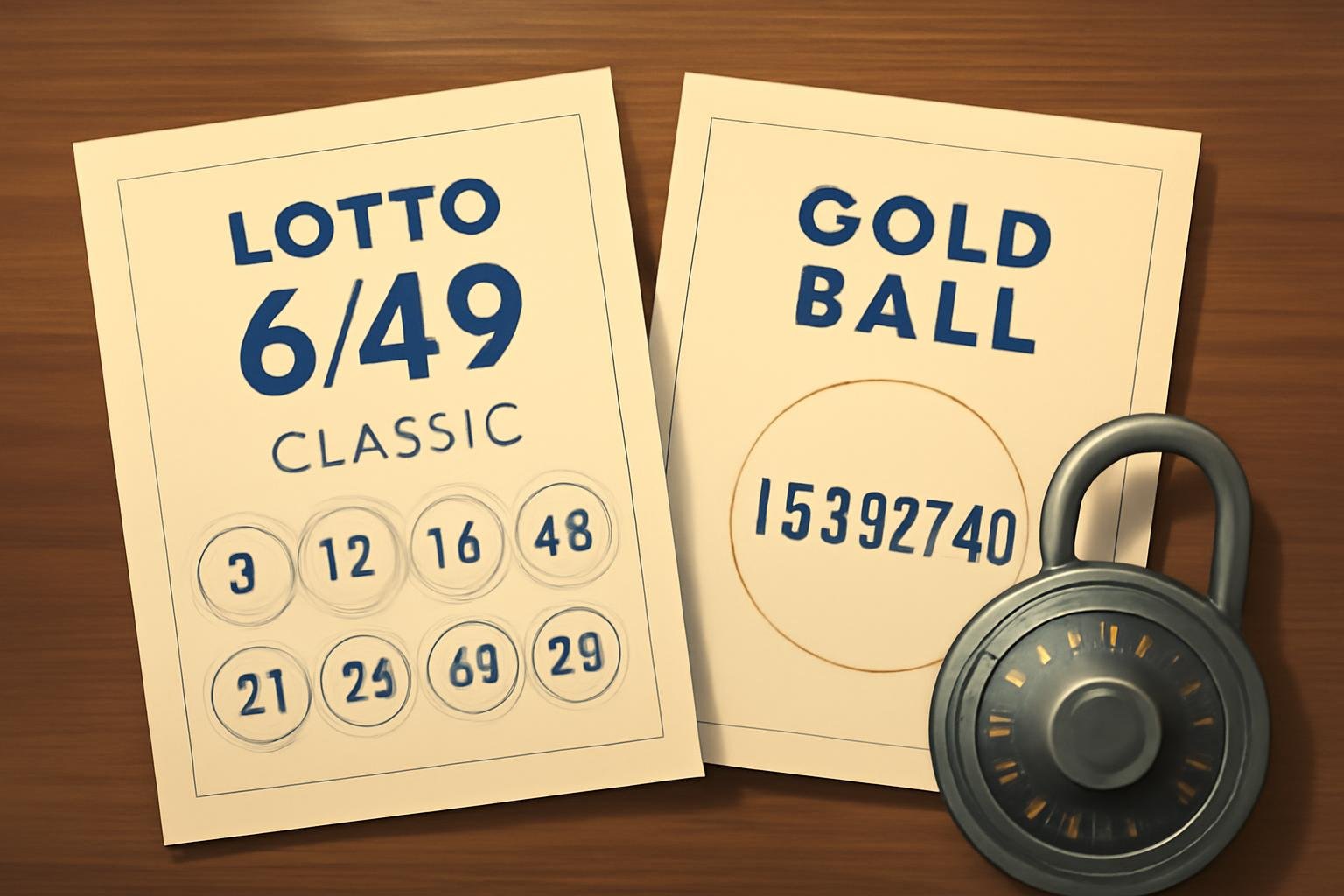
Canada Lotto 6/49: Keep Generated Numbers Apart from Gold Ball Codes
Canada's Lotto 6/49 combines two ideas that should not be mixed on a generator screen. The Classic Draw uses a familiar six-number selection. The Gold Ball Draw uses a separate identifier associated with an eligible play. Treating that identifier as an extra chosen lottery number creates a description of the game that the official ticket does not support.
A lotto 6/49 (canada) number generator is useful when its scope is clear. It can demonstrate a six-number Classic line and help a reader check the selection format. It should not imply that generating an identifier independently creates a registered Gold Ball entry or allows someone to choose an official winning code.
Define the Classic selection first
The Classic format asks for six different numbers from 1 to 49. A valid generated line therefore needs the correct count, values inside that field and no repeated main value. The six numbers represent a set. Displaying them in ascending order helps readers compare lines, but their order is not a further selection decision.
A common software mistake is to generate six independent values and remove duplicates afterwards. That can leave fewer than six numbers. A generator needs to continue until the line is complete or sample without replacement in the first place. The final visible output should make it easy to verify that all six distinct values are present.
The bonus belongs to the draw result
The Classic draw includes a bonus number used in the definition of certain prize categories. It is not a seventh value that a player adds to an ordinary six-number Classic selection. A tool may show a simulated result with a bonus for educational purposes, but it should label that result separately from a proposed entry.
This separation becomes important when someone compares generated numbers with an old draw. Six main result values and a bonus value can appear together in an archive, making the record look like a seven-number selection. The archive is describing what was drawn, while the generator is describing what a player selects. Those objects have different structures.
Gold Ball identifiers are a separate mechanism
An eligible Lotto 6/49 play also receives a Gold Ball Draw number through the authorized entry process. That code is not derived by adding another ball to the six Classic numbers. Its participation and validity come from the operator's system and applicable game conditions, rather than from whether a locally produced code looks plausible.
For that reason, a tool should avoid presenting an invented ten-digit example as an official issued identifier. A clearly marked illustration can help explain the difference, but it should remain an illustration. The accepted ticket record is the authority on which identifier belongs to a particular entry and the draw for which it is valid.
Check collections without changing their meaning
If a generator produces several Classic lines, sort each line before comparing the sets. Two rows with the same six values in different orders are the same Classic combination. The distinction is useful when counting unique main-jackpot coverage or reviewing a group record, even though it does not determine how the operator treats separately accepted entries.
The same Classic numbers can also occur on tickets carrying different Gold Ball identifiers. That does not make the identifiers interchangeable or allow the Classic line alone to stand in for the full ticket. A record should preserve both parts in their proper fields instead of attempting to infer one from the other.
Judge the tool by its explanation
Good generator documentation tells readers the active number range, whether repeated complete lines are allowed in a batch and whether the output is merely a selection example. It should explain any export format and preserve the game name alongside the numbers. These details make the output useful without adding predictions that the software cannot justify.
Avoid rejecting a valid line only because it contains consecutive values or an unusual odd-even split. Those visual features do not tell you that a particular set is less likely than another particular valid set in a fair Classic draw. Repeatedly refreshing until a line looks attractive is a personal preference, not a probability method.
When reviewing a screen capture, check the labels that sit outside the number boxes as well as the numbers themselves. A cropped image can remove the words Classic or Gold Ball and leave two unrelated items looking like one continuous selection. A complete text record avoids that source of confusion.
The practical objective is straightforward: six distinct Classic numbers, correctly identified, with bonus results and Gold Ball identifiers kept in their own roles. A generator can support that understanding. Official entry acceptance, issued identifiers and prize eligibility must still be confirmed through the lottery's authorized records.
