

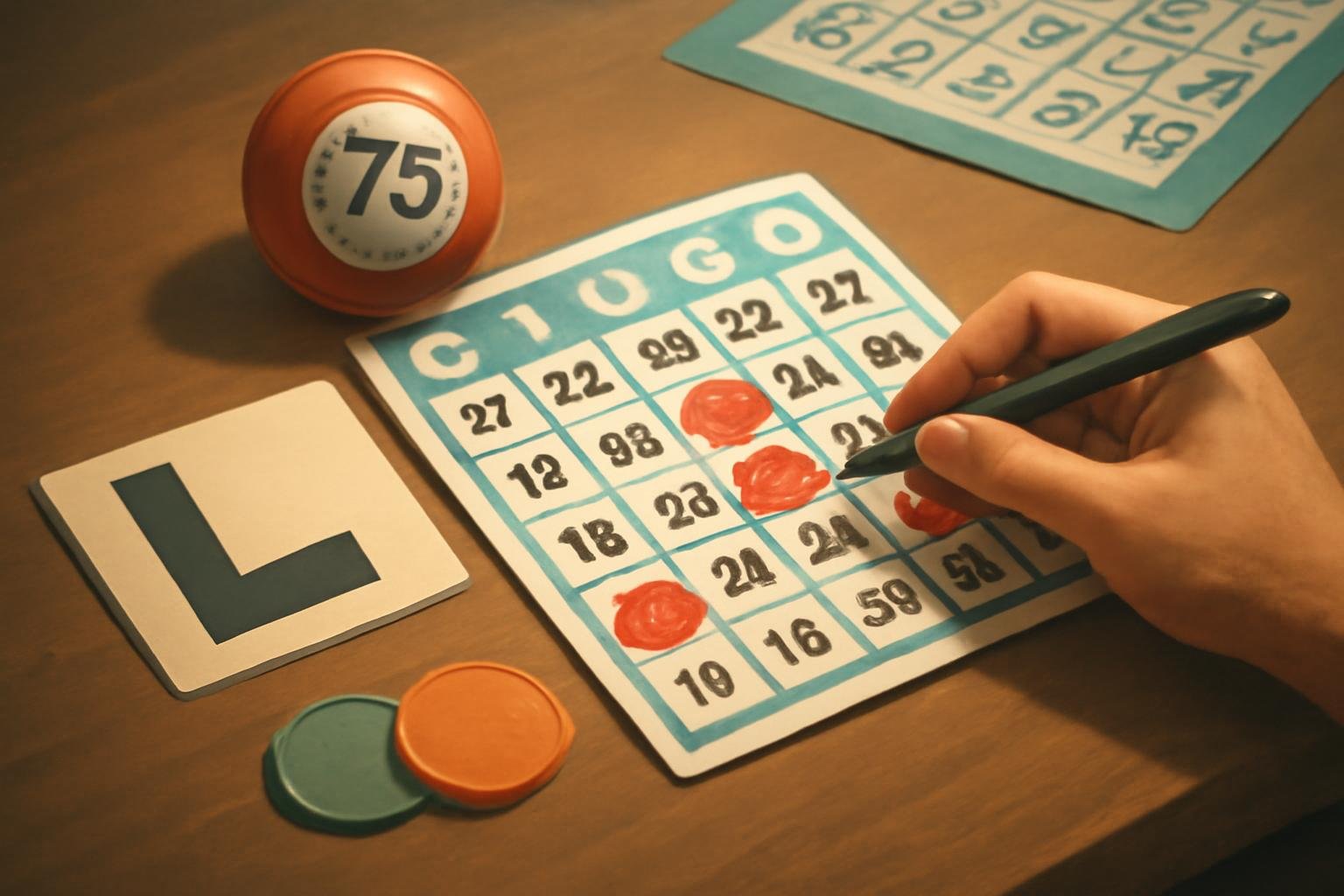
How to Read 75-Ball Bingo Patterns Without Missing a Win
In 75-ball bingo, keeping track of called numbers is only part of the job: you also need to know which spaces count toward the round’s winning pattern. A quick way to avoid confusion is to check the pattern before play, follow each call on your card, and confirm a possible win using the game’s rules. These habits help whether you are new to bingo or switching between different game formats.
Start by checking the pattern
A standard 75-ball bingo card has five columns labeled B, I, N, G and O, with five spaces in each column. But the goal can change from one round to another. A game might call for a straight line, a particular shape, or a coverall in which every required space must be marked. Some versions also treat the center space as free; others may use different card or pattern rules.
Before the first number is called, find the displayed pattern and compare it with your card. If the pattern is shown as a graphic, identify the exact squares that need to be covered rather than relying on a quick impression of its outline. Check whether the center square counts automatically and whether the pattern can be completed in any orientation. When in doubt, read the game instructions.
Track calls by column and number
Each called number belongs to a letter column. Use both parts of the call to locate the right space: for example, a call beginning with “G” belongs in the G column, not in another column that happens to contain the same number. Mark the number only when the letter and number match a space on your card.
- Listen for the full call. Don’t mark a number based on the number alone.
- Scan the correct column. This narrows your search and reduces mix-ups.
- Check your mark. A mistaken mark can make a pattern look complete when it is not.
If you are playing online, check whether the game marks numbers automatically or requires you to tap them. On a small screen, zooming or turning the device may make the card easier to read, if the game allows it. For broader context on playing on a phone, see this guide to mobile casino gambling’s advantages and drawbacks.
Follow the shape, not just a nearly complete line
Suppose the target is a diagonal from the top-left corner to the bottom-right corner. A marked line across the middle of the card may look promising, but it does not meet that pattern. For a more complex shape, mentally divide the card into rows and columns and check each required square against the display. A simple count of marked spaces is not enough if even one of them is in the wrong place.
Patterns can vary between rooms and rounds, so don’t assume that a shape you saw before is still the target. The site’s overview of online bingo discusses the appeal of the game, but the active round’s instructions are what determine its winning pattern.
Use a manageable number of cards
Playing more than one card can make it harder to follow calls and spot a completed pattern. If you are still learning, start with a number of cards you can comfortably scan before the next call. There is no universal number that suits every player: screen size, game pace, card layout and your own attention all matter. Adding cards does not change the pattern rules, and it can make missed calls more likely if you cannot keep up.
Some bingo rooms provide automatic marking, but that feature does not remove the need to understand the target. Check that the game has registered the right card and pattern, and know how its win-claim process works. Players interested in how online bingo fits into the wider range of games can also read this site’s guide to playing online bingo; always use the rules and details shown for the game you are actually playing.
What to do when your card seems complete
Pause long enough to compare every required square with the called numbers and the displayed pattern. If the room has a claim button or another win procedure, follow the instructions promptly; procedures differ. Don’t assume that a visual match is officially confirmed until the game indicates that the claim has been accepted.
The practical routine is simple: read the pattern first, mark calls carefully, and verify the exact shape before claiming. Set a comfortable pace and budget for play, and treat bingo as entertainment rather than a way to make money.


